Happy National Cat Day (October 29th every year)! Whether you share your home with a playful tabby, a regal Persian, or a spunky rescue, today is all about honoring our incredible feline companions. So I’m sharing a dozen aromatic cat facts to celebrate!
If you came here from my YouTube Short, welcome! While the video covered 7 quick highlights, there’s so much more to uncover about how cats navigate the world through scent.
Read on as we dive deep into 13 science-backed cat facts, plus essential safety tips for using aromatics and diffusers around your feline family members!
Fun Cat Facts for National Cat Day!
- Watch the YouTube Short: 7 Fabulous Aromatic Kitty Cat Facts
- 7 Aromatic Cat Facts (Featured in the National Cat Day Video)
- 1. Cats "Smell" With the Roof of Their Mouth
- 2. A Cat's Reaction to Catnip Is Genetically Inherited
- 3. Nepetalactone is the Secret Compound in Catnip
- 4. You Can Use Catnip Hydrosol the Same Way You Use Catnip Leaves
- 5. Many Big Cats Love Catnip, Too!
- 6. Valerian Root Boosts Playfulness
- 7. A Cat's Purr Vibrates at a Healing Frequency
- 6 Bonus Cat Facts: Digging Deeper Into Feline Senses
- Essential Rules for Safe Essential Oil Use Around Cats
- How to Celebrate National Cat Day With Your Kitty
- Where to Find the Cat-Favorite Aromatics Shared Here
Watch the YouTube Short: 7 Fabulous Aromatic Kitty Cat Facts
7 Aromatic Cat Facts (Featured in the National Cat Day Video)
Here are the 7 cat facts I shared in the YouTube short with expanded information about each.
1. Cats “Smell” With the Roof of Their Mouth
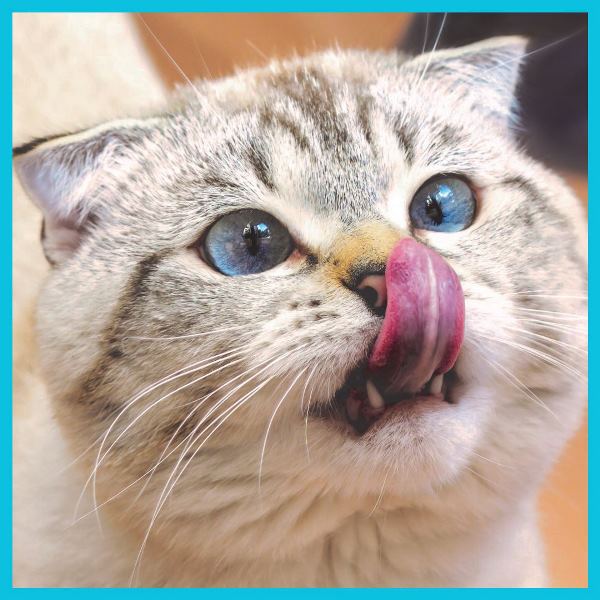
Have you ever noticed your cat opening their mouth slightly after sniffing something intriguing? This is called the Flehmen response. Cats possess a specialized sensory organ called the vomeronasal (or Jacobson’s) organ located in the roof of their mouth.
By pulling air through their mouth, they transfer scents, especially pheromones and plant aromatics, directly to this organ, allowing them to taste-smell complex environmental cues. The flehmen response is often followed by a lick across the nose.
2. A Cat’s Reaction to Catnip Is Genetically Inherited
If your cat turns up their nose at Catnip, they aren’t being picky! The sensitivity to Catnip is an inherited autosomal dominant gene. In fact, as many as 40% of cats lack the specific genetic receptors required to experience the famous “catnip high.” Additionally, young kittens under 3-6 months generally do not react to Catnip. This is because their brains and olfactory systems are still developing. Once they’re fully mature that Catnip response unlocks.
3. Nepetalactone is the Secret Compound in Catnip
What makes Catnip (Nepeta cataria) so intoxicating to felines? The secret lies in a volatile organic compound called nepetalactone.
When a cat inhales nepetalactone, it binds to olfactory receptors in their nasal tissue, triggering a chemical cascade in the brain that mimics feline facial pheromones. This produces temporary behavioral changes ranging from energetic rolling and zooming to deep, relaxed bliss.
By the way, Catnip can also have a calming, blissful effect on humans!
4. You Can Use Catnip Hydrosol the Same Way You Use Catnip Leaves
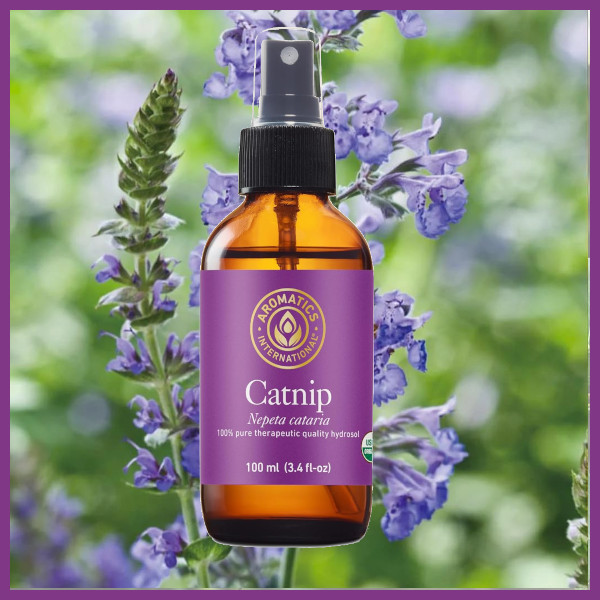
If you love giving your cat the aromatic benefits of Catnip but hate cleaning up dry leaf debris from your carpet, Catnip hydrosol is a game changer.
Hydrosols are the delicate floral waters created during the steam-distillation of plant material. A light spritz of pure Catnip hydrosol onto a cat bed, scratching post, or soft toy provides the enticing nepetalactone aroma without leaving green leaf crumbs everywhere!
5. Many Big Cats Love Catnip, Too!
Domestic cats aren’t the only ones susceptible to plant aromatics. Field research and zoo enrichment show that many big cats, including lions, leopards, jaguars, and cougars, react to nepetalactone with the exact same chin-rubbing, drooling, and playful rolling as a 10-pound house cat! Interestingly, tigers are generally not affected by Catnip.
6. Valerian Root Boosts Playfulness
If your cat happens to be part of the cat population who are immune to Catnip’s playful effects, Valerian root (Valeriana officinalis) is an exceptional alternative.
Valerian root contains actinidine, another natural botanical stimulant, that triggers playful, energetic behavior in many cats. A tiny sprinkle of dried Valerian root can instantly revitalize an older cat’s playtime routine.
7. A Cat’s Purr Vibrates at a Healing Frequency
A cat’s purr is far more than an expression of happiness. Domestic cats purr at a frequency between 20 Hz and 140 Hz. Sound frequencies within the 20-50 Hz range may promote bone density growth, ease muscle tension, reduce pain, and accelerate tissue repair. Scientists believe cats may purr as a self-soothing, internal healing mechanism during times of recovery or stress.
6 Bonus Cat Facts: Digging Deeper Into Feline Senses
8. Silvervine Packs a Bigger Punch Than Catnip
While catnip relies on a single main compound (nepetalactone), Silvervine (Actinidia polygama) contains at least six different aromatic compounds (including actinidine, found in Valerian root). Silvervine can produce a blissful response in up to 80% of cats, including many cats that ignore catnip completely! Silvervine is often combined with Catnip.
9. A Cat’s Sense of Smell Is 14 Times Stronger Than Ours
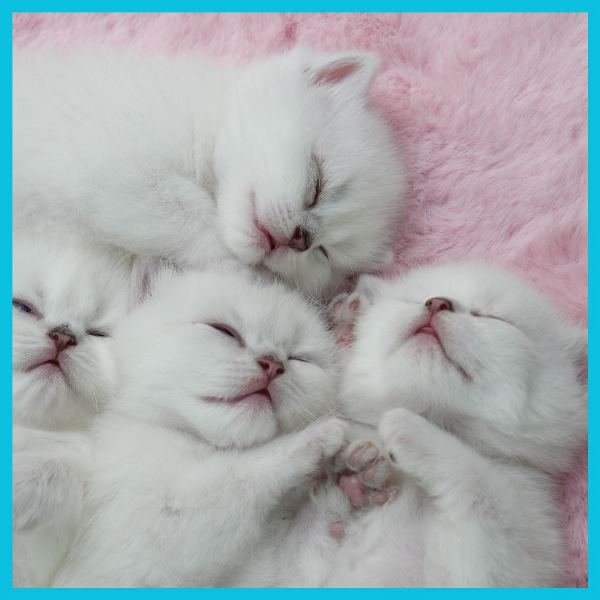
Cats possess up to 200 million olfactory receptors in their nasal cavities. Compared this to a human’s modest 5 million!
Have you ever seen a newborn kitten? Their eyes are closed for the first 7-14 days of life. So, long before cats rely on their eyesight, they navigate their surrounding environment through a detailed, high-definition scent map.
10. Facial Scent-Marking Is a Cat’s Comfort Blanket
Cats have scent glands concentrated on their cheeks, forehead, chin, and paw pads. When your cat rubs their face against your legs, doorways, or furniture (called bunting), they deposit facial pheromones that transform their space into a safe, familiar, and low-stress territory.
11. A Cat’s Nose Print is Unique
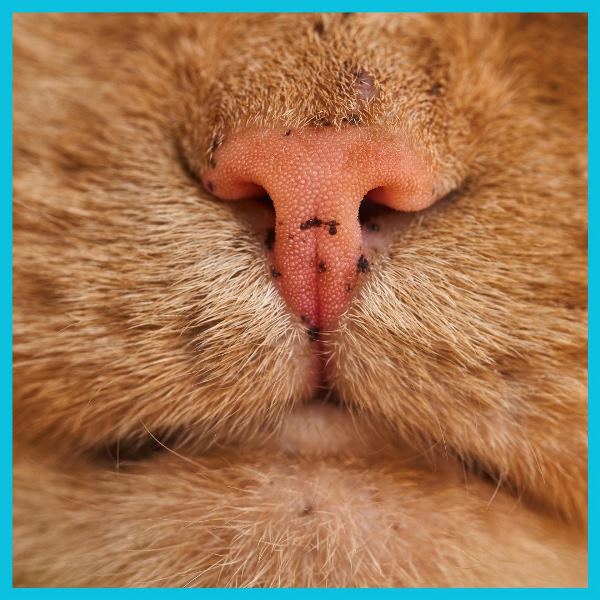
Just like our fingerprints our unique to each of us, every cat has a nose print that’s unique to them. The tiny pattern of ridges and bumps on a cat’s nose leather is completely distinct to each individual cat.
12. Citrus Scents Are Natural Feline Repellents
A cat’s nose is highly sensitive to the d-limonene compounds found in lemons, oranges, limes, and grapefruits. Because concentrated citrus aromas are overwhelming to cats, pet-safe deterrent sprays frequently utilize citrus extracts to keep cats away from delicate furniture.
13. Feline Livers Cannot Process Most Essential Oils
Cats lack a vital liver enzyme called glucuronyl transferase, which is required to metabolize essential oil compounds (particularly phenols and monoterpenes). Because of this, the constituents in Tea Tree, Eucalyptus, Peppermint, Lavender, and citrus essential oils, among others, can accumulate in their bodies and cause toxicity.
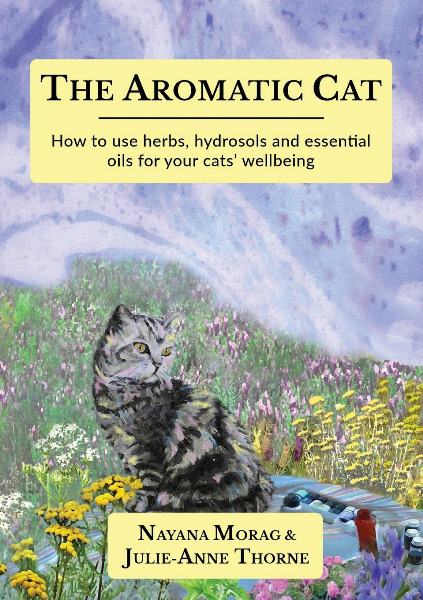
⭐️I love this book “The Aromatic Cat” by Nayana Morag and Julie-Anne Thorne. Herbs and essential oils are safe for cats, when used appropriately. This book is a great guide for cat owners who would like to use herbs and aromatherapy to support their kitty’s health and well-being. (Available on Amazon.)
Essential Rules for Safe Essential Oil Use Around Cats
Because feline respiratory systems and livers are so sensitive, enjoying essential oils while keeping your pets safe has a few non-negotiable precautions:
- ALWAYS Keep Doors Open: Never confine a cat in a closed room with an active diffuser. Your cat must always have an unrestricted path to exit the room if an aroma feels overwhelming to their sensitive nose.
- ALWAYS Maintain Adequate Ventilation: Only run a diffuser or use a room spray in well-ventilated, open spaces. Use the intermittent setting and turn off the diffuser when you leave the house.
- NEVER Apply Essential Oils Directly: Never apply pure essential oils or concentrated extracts directly to your cat’s fur, skin, or paws. During self-grooming, your cat will ingest those concentrated oils, which can lead to poisoning.
- NEVER Add Oils to Food or Water: Essential oils should never be added to pet food, drinking water, or treats under any circumstances.
- ALWAYS Stick to Pet-Safe Botanicals: For direct enrichment, stick strictly to cat-safe options like dry Catnip, Silvervine, Valerian root, or pure catnip hydrosols sprayed lightly onto toys.
How to Celebrate National Cat Day With Your Kitty
Want to make today extra special for your pet? Here are a few quick ways to put these aromatic cat facts into action:
- Create an Aromatic Toy: Lightly mist a felt mouse with pure Catnip hydrosol or stuff a pinch of Valerian root inside a kick-toy.
- Set Up a Scent Tasting Station: Offer your cat small, separate sniffs of fresh Catnip, Silvervine, and Valerian root to discover their absolute favorite botanical.
- Schedule Quality Purr Time: Spend 15 minutes cuddling or grooming your cat to induce those beneficial 20–50 Hz purr frequencies for both of you.
Happy National Cat Day!


Where to Find the Cat-Favorite Aromatics Shared Here
- Catnip Hydrosol (Nepeta cataria)
- Catnip Leaf (Nepeta cataria)
- Certified organic cut & sifted Catnip leaf is a winner with my grand-kitty Aspen. Also makes a great addition to an evening herbal tea blend. Sprinkle a bit on the carpet and watch your kitty have fun while sipping your relaxing Catnip tea! I like this one from Starwest Botanicals (on Amazon).
- Valerian Root (Valeriana officinalis)
- My favorite supplier for herbs is Elanen Naturals. She has a beautiful Certified Organic Valerian Root. The combination of Valerian Root and Catnip is a fun blend for cats! And Valerian Root can be used in a bedtime tea to support restful sleep in humans. Buy from Elanen Naturals Direct or on Amazon.
- Wool Kitty Toy Balls
- Aspen loves these soft wool balls! He bats them all over and loves when they’ve been sprayed lightly with Catnip hydrosol. Available from Earthtone Solutions, they’re made by hand in Nepal. You can find them on Amazon.
- Meowy Janes carries an excellent sampler with Catnip, Silvervine, and Valerian Root. They also carry herb blends and powders and Silvervine fruit chew sticks! Check them out on Amazon.

This information has not been evaluated by the Food and Drug Administration and is not intended to diagnose, treat, cure, or prevent any disease. It is for educational purposes only.
All recipes provided are for personal use and are not designed for re-sale or large-scale manufacturing.
Please consult your doctor, naturopath, herbal practitioner, or other qualified health professional for medical advice and before starting any herbal regimen, particularly if you are pregnant or nursing, have any existing medical conditions, or are taking any medications.

Christine Pressler | Author, Certified Aromatherapist, Natural Skin Care Formulator
Christine is an avid reader, writer, lifetime learner, and proponent of self-care for better mental health and energy. She enjoys formulating bespoke aromatherapy, skin care, and herbal products to support her family, pets, friends, and clients. She also loves experimenting with recipes in the kitchen.💚 (Learn more >>)